Removing stains from clothing, sofas, carpets and surfaces
Stain removal works best when you first consider the type of stain and the material. A grease stain on clothing requires a different approach than coffee on a carpet, makeup on a collar, mud on children’s clothing or a sauce stain on the sofa. In this category, you’ll find stain removers, detergents, cleaning cloths and cleaners to tackle stains more effectively.
Many people treat every stain the same way, but that often doesn’t work. Grease, dyes, proteins, mud and makeup react differently to water, heat and cleaning products. For clothing stains, you can combine these products with detergents for clothing with stains, while surfaces and hard materials may require a different cleaner.
Start with the type of stain
The most important step is determining what kind of stain you have. Grease stains often come from oil, butter, sauce, mayonnaise, sunscreen or skin oils. These stains can penetrate deeply into textiles and may remain visible after a regular wash. Coloured stains such as coffee, tea, red sauce or wine can quickly soak into fibres and leave a visible ring.
Makeup stains are different again. Foundation, lipstick, mascara and powder often contain pigments and oily ingredients. As a result, you usually need a combination of careful blotting, pre-treatment and then washing or cleaning. With mud, it is often better to let it dry first and remove loose dirt before using water.
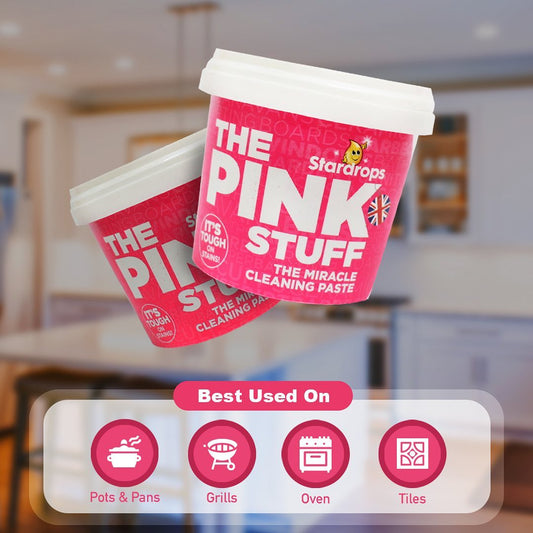
With hard surfaces such as countertops, tiles, sinks or kitchen equipment, the focus is less on fibres and more on buildup, grease and residue on the surface. For stubborn stains and dirt on suitable surfaces, The Pink Stuff for stains and stubborn dirt can be a logical choice.
Removing stains from clothing
Speed is important with clothing. The sooner you treat a stain, the greater the chance of removing it properly. Carefully blot away excess moisture or dirt and avoid vigorous rubbing. Rubbing can make the stain larger or push it deeper into the fibres.
Pre-treating is often smarter than washing immediately. Apply a suitable stain remover or detergent to the stain, let it work briefly according to the instructions and then wash according to the care label. Always check that the stain is gone before putting the garment in the dryer. Heat can set some stains more firmly.
Children’s clothing often has a mixture of stains: mud, fruit, sauce, grease, grass and drinks. Don’t treat all of these in the same way. It is better to let mud dry first and brush it off, while sauce or grease requires more immediate attention. This helps prevent the stain from being worked deeper into the fabric unnecessarily.
Removing stains from sofas or carpets
With sofas and carpets, caution is more important than speed alone. You usually cannot simply rinse these materials as you would clothing. Too much water or cleaning product can cause rings, especially on thick fabrics, cushions, rugs and upholstery.
Always blot first. Use a clean cloth and work from the outside towards the centre so the stain does not spread. Use small amounts of product and, when in doubt, test it on an inconspicuous area. For blotting, absorbing and finishing, cleaning cloths for stains and textiles are useful.
With carpets, it is important to remove residue thoroughly. If cleaning product remains in the carpet, dirt may adhere more quickly later. Let the area dry naturally and avoid walking over it while it is still damp.
Grease stains, sauce stains and kitchen stains
Grease stains are stubborn because grease bonds to fibres. Examples include cooking oil, butter, mayonnaise, snacks, meat gravy, sauce or dressing. On clothing, grease stains sometimes only become clearly visible after the garment has dried. Treat grease before washing and do not use the dryer while the stain is still visible.
Sauce stains may contain grease, colouring and spices. Red sauce, curry, marinade and tomato can quickly cause discolouration, especially on light-coloured fabrics. First blot away excess sauce and then treat the stain specifically. Do not rub hard, as this can push pigment and grease deeper into the material.
Stains can also occur on hard kitchen surfaces, such as countertops, tiles, the edge of a hob or baking trays. For this type of dirt, this category pairs well with products for grease and baked-on dirt.
Removing old stains
Old stains are more difficult because they have had longer to penetrate the material. They may already have been washed, dried or exposed to heat, causing the stain to set more firmly. Nevertheless, you can often still improve the result by pre-treating again and repeating the process carefully.
Patience is important with old clothing stains. Treat the area, allow the product to work and wash again according to the care label. Then check the result before using heat. With old stains on sofas or carpets, you need to be even more careful, as overly aggressive cleaning can cause rings or discolouration.
After removing a stain, an odour may sometimes remain, for example from pets, milk, sweat or moisture. For textiles that are clean but still do not smell fresh, you can look at clothing fresheners for textiles after stain removal.
Frequently asked questions about stain removal
Why do you need to know what type of stain it is first?
Because not every stain reacts in the same way. Grease requires a different treatment than coffee, mud, makeup or sweat. If you immediately use water, heat or the wrong product, you may push some stains deeper into the material. First consider the cause of the stain and the material. Only then choose the right approach: blotting, letting it dry, pre-treating, washing or cleaning carefully.
How do you treat a stain before washing clothes?
First remove loose residue and carefully blot away moisture. Then apply a suitable product to the stain and let it work briefly according to the instructions. Wash the garment according to the care label. After washing, check that the stain is truly gone before drying the garment with heat. Grease, sauce and makeup in particular can become more difficult to remove when exposed to heat.
What should you do if a stain is still visible after washing?
Do not put the garment straight into the dryer. Heat can set the stain further. Treat the stain again with a suitable product and wash the garment once more according to the care label. With grease stains, you often only notice after drying that a shadow remains. It is better to repeat the process carefully than to scrub aggressively, especially with delicate fabrics.
How do you remove stains from sofa fabric without causing rings?
Use little moisture, blot instead of rubbing and work from the outside towards the centre. Always test a product on an inconspicuous area first. Use a clean cloth and make sure no cleaning product residue remains. Too much water is a common mistake when treating sofa stains, as it can cause rings. Let the fabric dry naturally and treat it lightly several times rather than soaking it once.
Which stains should not be treated with heat?
Be careful with heat when dealing with grease, blood, egg, milk, sweat, makeup and some sauce stains. Heat can cause substances in the stain to bond to the fibres, making them more difficult to remove. Do not use hot water or the dryer immediately if you are not sure the stain is gone. Treat it specifically first and check the result before using heat.
How do you deal with stains from children or pets?
With children and pets, stains often consist of a mixture of food, drinks, mud, grass, urine, saliva or grease. First remove solid residue and blot away moisture. For textiles, treat the stain before washing. On sofas or carpets, use little moisture and a clean cloth. Also pay attention to odours, as some stains may appear to be gone but continue to smell if the fabric has not been cleaned or dried properly.
When should you use a cloth and when should you use a stain remover?
Use a cloth to blot, absorb moisture and remove residue. Use a stain remover when the stain has penetrated the material or does not disappear with water alone. With fresh stains, you will often start with a cloth. Then treat the stain specifically with a product suited to the stain and material. Always be careful with textiles and test first if in doubt.
Why ViralCleaning?
At ViralCleaning, you’ll find products for different types of stains: grease, sauce, coffee, mud, makeup, old stains, sofa stains, carpet stains and clothing stains. For stain removal, you don’t choose one standard approach, but the right product and tool for the stain, material and situation.